Temporary IR Lab Options
Are you planning on upgrading your IR lab?
There are a lot of reasons to be excited for a new Interventional Radiology Lab!
There’s also a lot of work and planning involved.
Whether your needs are cardiac or IR, book an on-site
mobile cath lab or mobile IR lab.
Do you have a plan for continuing procedures during the resulting IR Lab construction and replacement downtime?
The biggest challenge you will likely face during an Interventional Radiology Lab replacement or upgrade will be finding a way to continue to treat patients during your IR Lab’s downtime. This is essential to your patients, your Radiologists, and your facility’s bottom line.
If you do not plan for your downtime properly the result will be reduced procedure capacity for your providers that will consequently force them to reduce their surgical volume. This negatively impacts both your patients and your bottom line.
When upgrading to a new IR lab, manufacturers such as GE, Philips, and Siemens will tell you that your downtime will be between 3 to 6 months. This is the best-case scenario.
Atlas Medical has helped hundreds of hospitals, OBLs, and ASCs bridge this downtime gap.
Our internal data shows that the average IR lab replacement results in an average of 9.4 months of downtime.
9.4 months is a long time to be using a temporary IR Lab. When deciding on a temporary Interventional Radiology Lab solution it is important to consider the both the workflow for your clinical staff and the patient experience.
The Best
Temporary IR Lab Solution
Consider the components of a state-of-the-art Interventional Radiology Lab. These IR Labs are built directly into a hospital's Procedure Room or Operating Room floor, ceiling, or both.
Fixed IR Labs consist of 3 main components:
- a fixed C-arm built into either the floor or ceiling
- a vascular surgical table installed into the floor
- a large monitor and boom installed on the ceiling
Recent technological advancements have allowed manufacturers to offer these
3 components in a mobile offering that is clinically comparable to a fixed IR Lab.
Surgical providers can continue to operate on patients during downtime by utilizing mobile equipment to create a ‘Mobile IR Lab’.
These Mobile IR Labs consist of the 3 main components of a fixed IR Lab, but each component is mobile:
- mobile C-arm on wheels
- mobile vascular surgical table on wheels
- mobile large monitor system on wheels
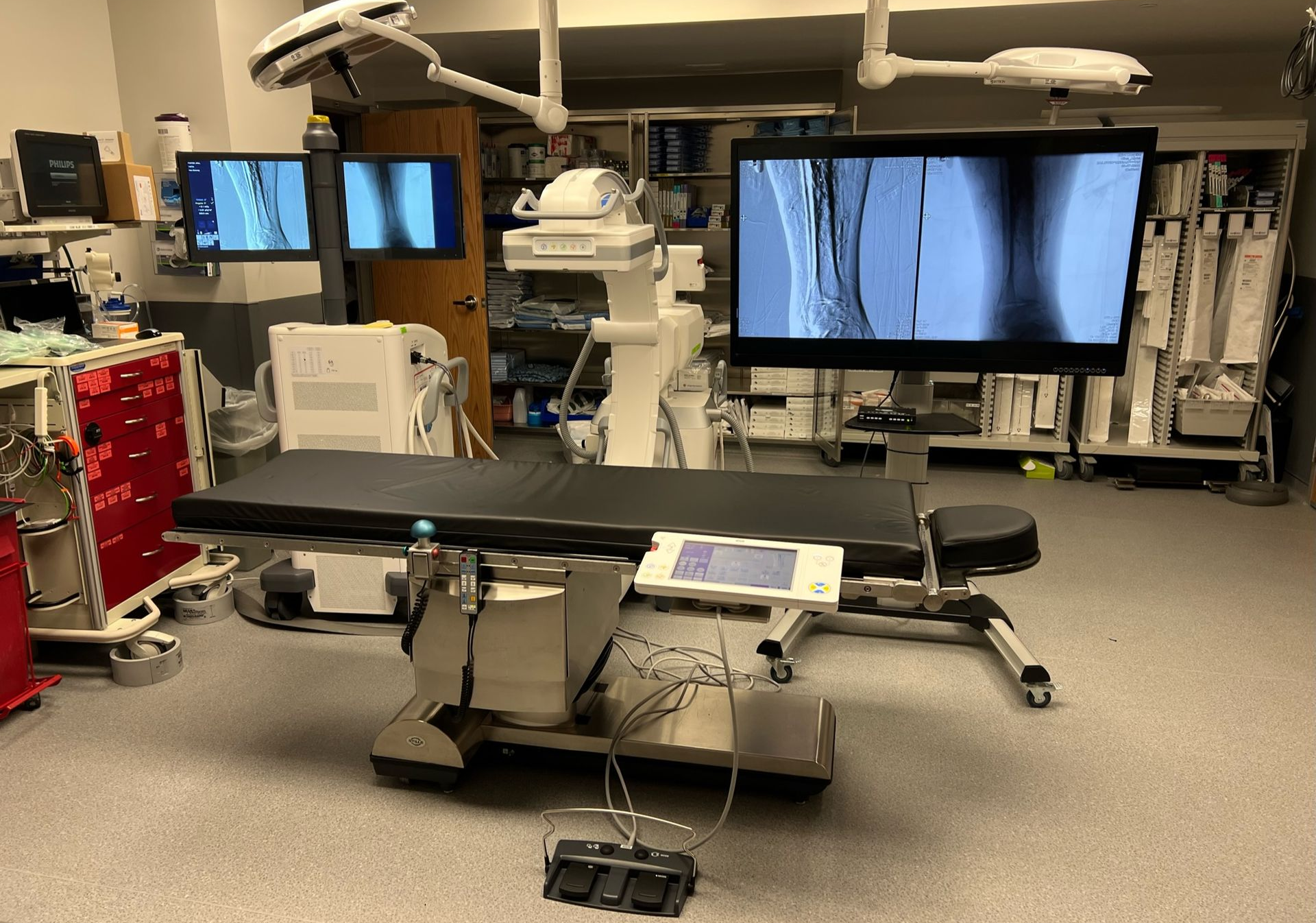
A Mobile Interventional Radiology Lab requires a room within the hospital to be converted into a temporary IR Lab during your IR Lab’s downtime.
Common rooms we see converted into Mobile Interventional Radiology Labs include:
- Procedure Rooms in the Radiology Department
- Operating Rooms
- Any room in the hospital that is under utilized
Since all of the technology is mobile it can be wheeled in and out of the room. The only potential limiting factor are local laws regarding having led lined walls for mobile fluoroscopy equipment. These laws vary by region.
Temporary Interventional Radiology Lab
CHECKLIST
Identify room to be used for your temporary IR Lab
Identify changes that will need to be made from your typical patient and clinical workflow
Locate or source the 3 components of a Mobile IR Lab
- Mobile C-arm
- Mobile Vascular Table
- Mobile Large Monitor System
What technology is used to create a Mobile IR Lab?
How do I create a Mobile IR Lab?
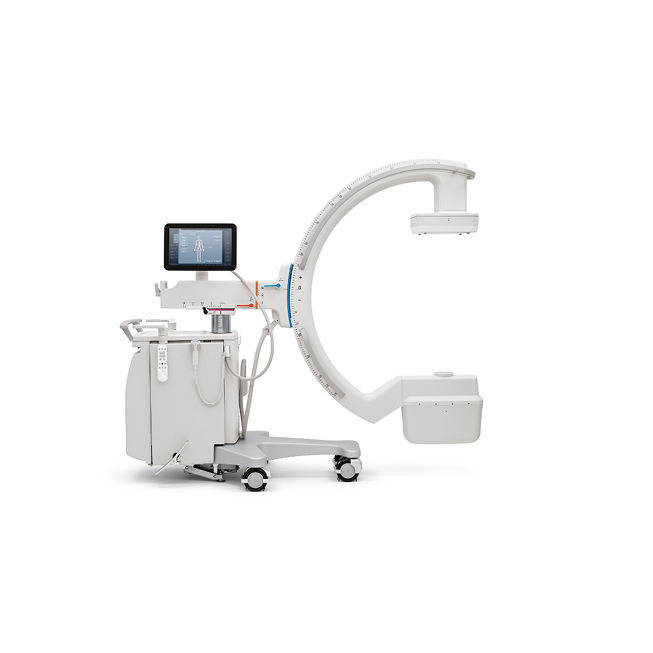
Mobile C-arm
Mobile C-arms manufactured just 10 years ago were not up to the task of providing IR Lab quality imaging. That has since changed. Today’s high-end Vascular C-arm manufactured by GE OEC, Philips, Siemens, and Ziehm likely provide better image quality and performance than the old Interventional Radiology Lab you are replacing.
This is made possible by the following technological improvements:
- Flat panel detectors replacing Image Intensifiers - Better image quality, large field of view, lower dose
- Larger generators - Prevents overheating and provides better image quality
- Advanced cooling mechanisms - Prevent overheating that occurred in older C-arms
- Motorized movements - Allow for similar workflow as a fixed IR Lab
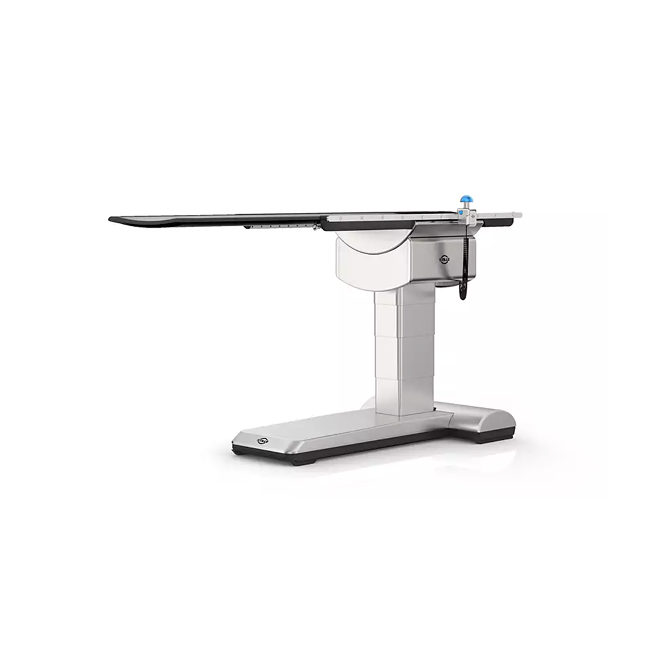
Vascular Surgical Tables
Your Interventional Radiologist depends on your IR Lab’s Vascular Surgical Table to properly position and move their patients.
Today’s leading Surgical Table manufacturers such as IDI and Stille offer mobile Vascular Surgical Tables that can do everything an IR Lab’s Surgical Table can do:
- Free-float movements
- Iso-roll / Airplane
- Trendelenburg / Reverse Trendelenburg
- Elevate
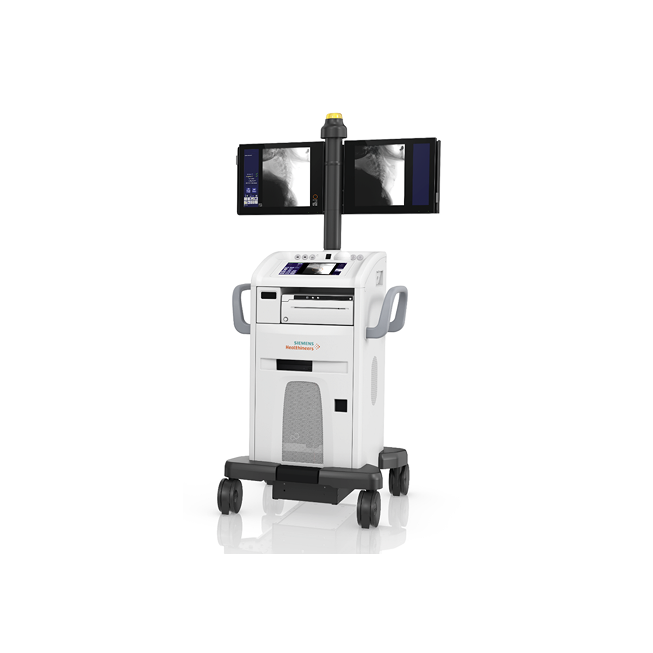
Mobile Large Monitor System
IR Labs offer Radiologists high quality images on large screens. A 19” or 32” mobile C-arm screen doesn’t compare to the 55” 4K monitor that is used in today’s Interventional Radiology Labs.
Atlas Medical offers a 55” 4K mobile monitor system to pair with your mobile C-arm. This system can connect to your mobile C-arm via or DVI cable or wirelessly.
Mobile Cath Lab Trailer or Mobile Cath Lab Truck
Ensuring continuity of Interventional Radiology services is paramount to your patient population and bottom line.
The mobile solution described up to this point may not work for all hospitals. Although the gap has been closed there are still limitations between a fixed Interventional Radiology Lab and a mobile Interventional Radiology Lab that utilizes a mobile C-arm. Interventional Radiologists may not be comfortable with the latter. Additionally, hospitals often have space constraints and don't have an extra procedure room available for this equipment.
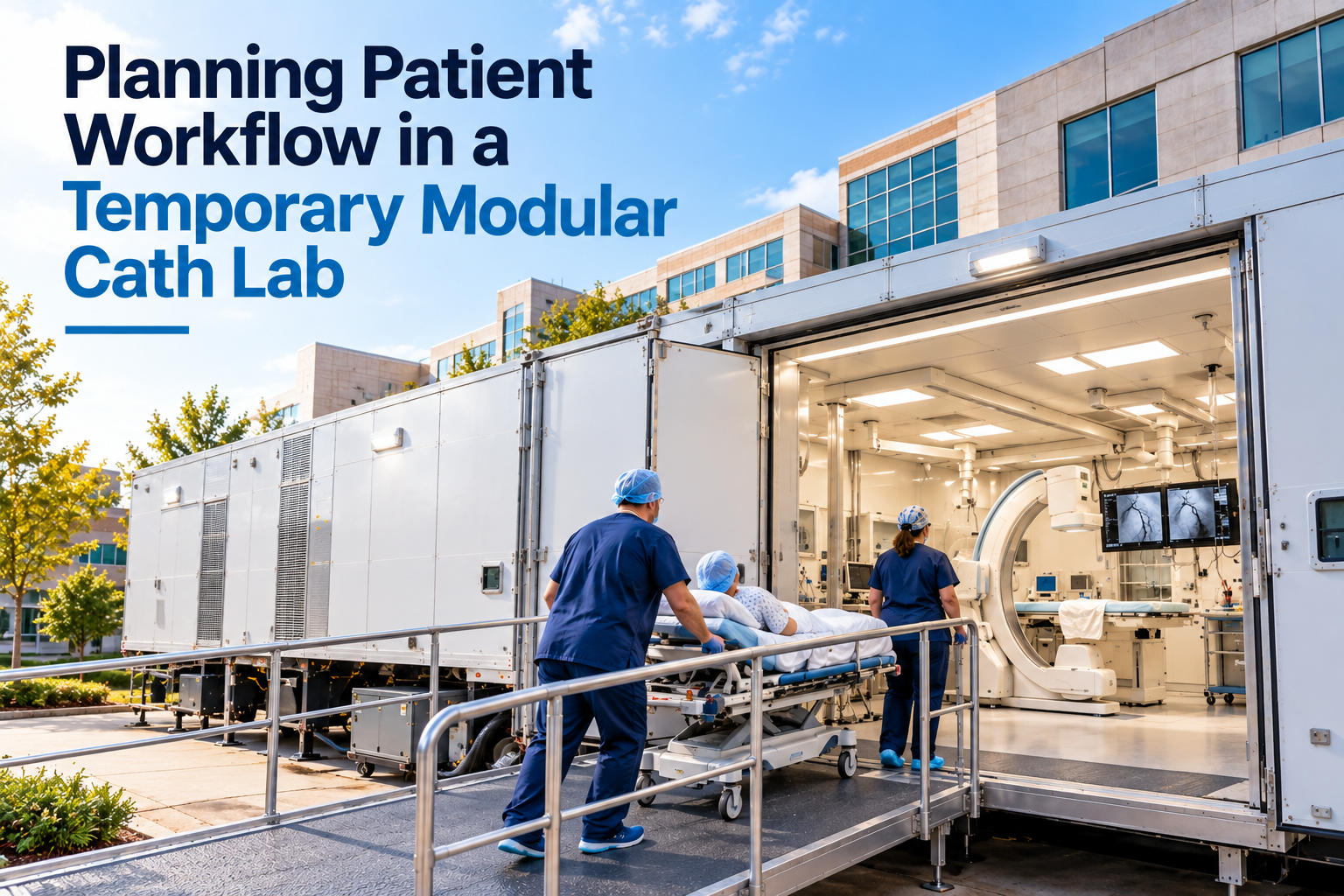
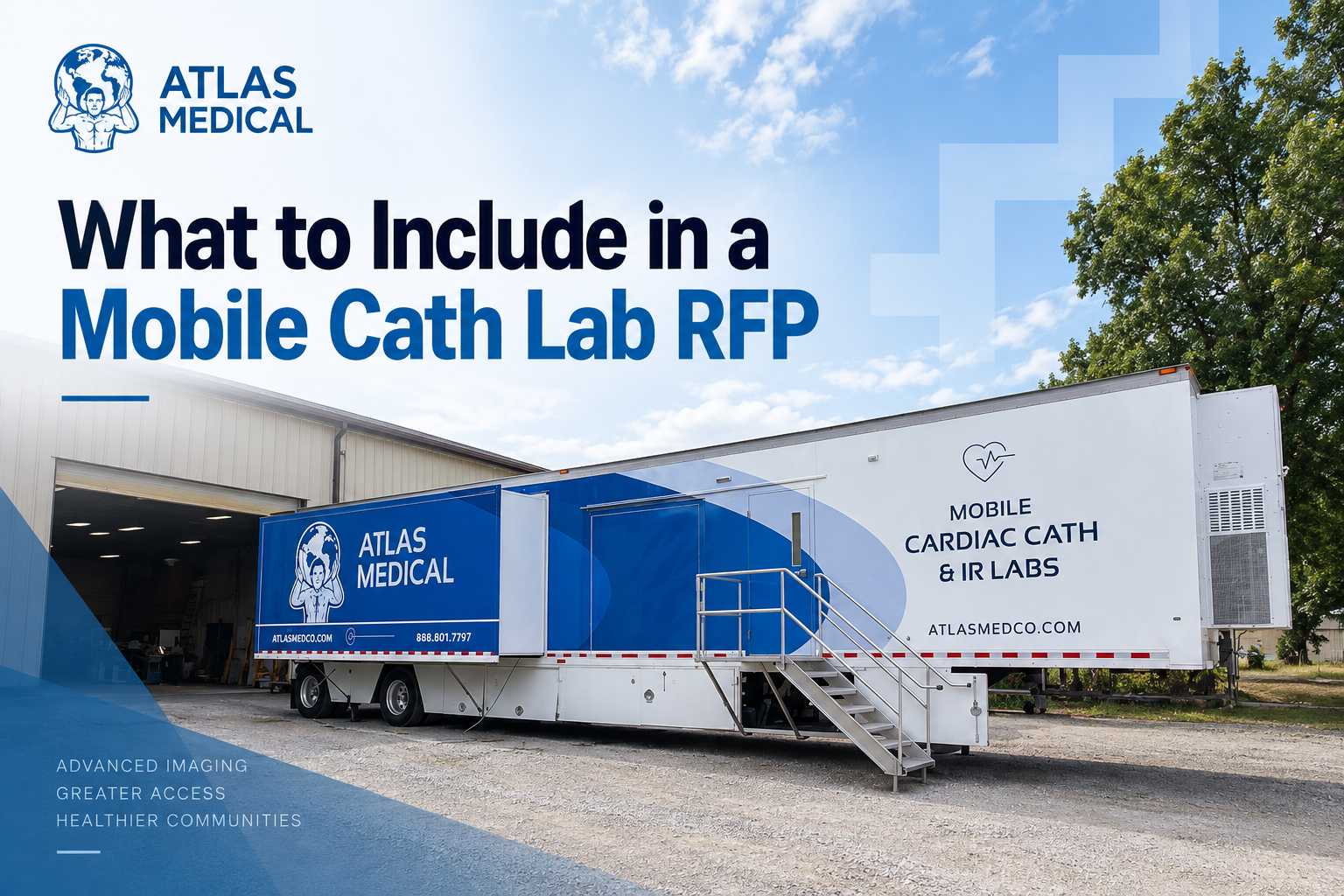
Enter the Mobile Interventional Radiology Trailer or Mobile Interventional Radiology Truck from Atlas Medical.
Our Interventional Radiology Trailers are designed to allow hospitals to bridge the gap during renovations or to allow a temporary increase in case volume. Mobile Interventional Radiology Trucks offer the same cutting-edge technology found in a fixed IR lab, all within a conveniently accessible trailer parked in the hospital's parking lot.
The interior layout of our Mobile Interventional Radiology Trailers mirrors that of a standard IR lab. Medical staff and Interventional Radiologists can maintain their standard workflow.
Where can I rent the technology and equipment to create a temporary Mobile IR Lab or a Mobile Interventional Radiology Lab Trailer?
Atlas Medical is your one stop shop for a temporary Mobile IR Lab. We’ve helped hundreds of customers avoid surgical capacity limitations due the IR Lab downtime.
We rent entire Mobile Interventional Labs or individual components to fill in your missing pieces.
Don't hesitate to reach out to us for guidance and/or Mobile IR Lab quotes.
About Atlas Medical
Atlas Medical has been providing hospitals with mobile imaging and interventional solutions for over a decade. Hospitals continue to work with Atlas Medical for their mobile imaging needs after experiencing our conversion of:
- State of the art technology
- Extensive clinical knowledge
- Award winning service
Our mobile imaging and interventional fleet includes:
Diagnostic Imaging Mobile Rentals:
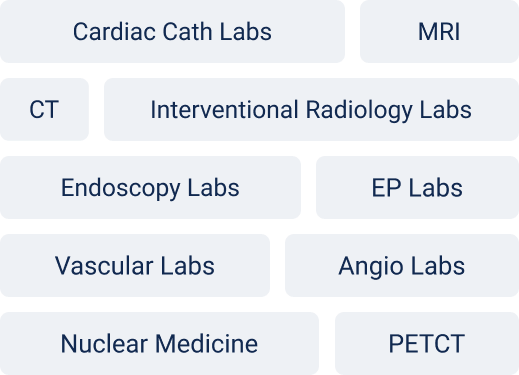
MRI, CT, PETCT, Nuclear Med
Interventional Mobile Rentals:
Cardiac Cath, Angio, Vascular, Interventional Radiology, and EP
Atlas Medical works with customers that need rental mobile imaging solutions during construction downtime, do not have permanent access to state of the art imaging and interventional technology, are experiencing a temporary or seasonal volume increase, and/or require a temporary rental solution while waiting for budget approvals.
Reach out today to tailor a mobile solution for YOU.
support@atlas-medllc.com

Sean Schneider
Mobile Project Manager · Atlas Medical
About the Author
Say hello to Sean Schneider - our Mobile Project Manager at Atlas Medical. Sean has worked in the medical imaging industry for over 20 years, including 10 years with Atlas Medical.
Sean has a knack for making complicated projects simple to understand. Around here, Sean's the man who keeps things moving smoothly.
When Sean isn't helping launch our mobile imaging units at new sites he enjoys spending time with his family, golf, and hockey.
Request a Mobile Imaging Solution
Our Services Include: